Light Duty Crane Operator Training in B.C

If you operate a light duty crane in B.C and it lifts less than 5-tons based on the 2nd figure of your load chart.

Our 1-day on-site light duty crane operator training program will help you and your operators learn stronger fundamentals of safe crane operation and keep your equipment in better operating condition.


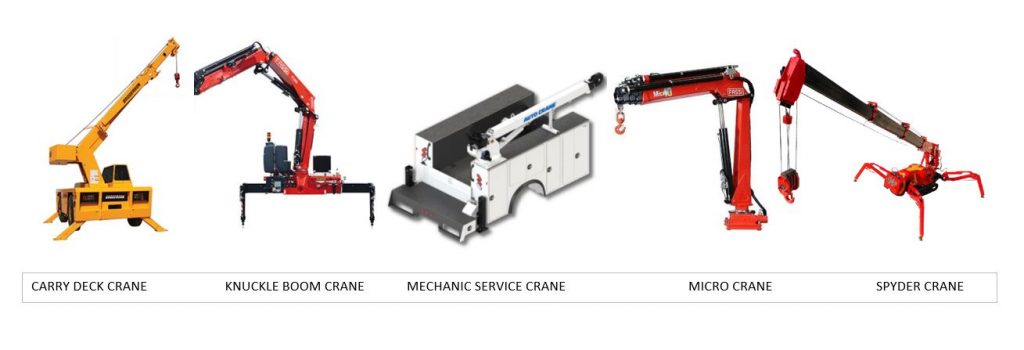
Our programs are for the following types of cranes:

– Knuckle Boom Pickers
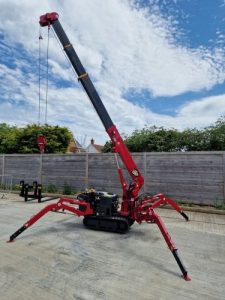
– Spider Cranes
– Carry Deck Cranes
– Mechanic Service Body Cranes
As well as many stationary cranes.

Our program is 1-day in duration and does NOT include any rigging discussions as rigging programs are a separate full day program themselves.

In B.C, the governing program for safe crane operations is BC. Crane Safety and they advise that if your crane lifts less than 5-tons, attending their programs for larger cranes is not necessary.

Insurance in B.C does prefer to have all operators take some form of crane safety so our program will also ensure your operators receive top notch information on how to remain safe while operating your equipment.

If you have recently taken delivery of a new or newer crane, you will want to provide your operator with picker training so that they start off safe and it’s up to you to continue monitoring that process.

For more information you can call us at [587] 209-2589

or email us HERE for more details.

We come to your location, use your crane and by doing so, reduce your training costs


Light Duty Picker Operator Safety Training

Light Duty Picker Truck Operator Safety Training


Light Duty Picker Operator Safety Training Programs

We are celebrating 14 years of providing fundamental light duty picker crane safety training programs throughout western Canada.

Located in Calgary and Edmonton, we provide your company with On-Site picker truck training and operator certification on the following types of cranes:

The light duty picker operator safety programs we offer are for: HIAB pickers, Fassi Pickers, Copma Pickers and Ferrari Pickers as well as Broderson carry deck cranes, Spider cranes and mechanic service body cranes.

Our one-day programs are delivered to your operators at your location only, using your cranes to make sure that the operator keeps familiarity with the crane type.  We do have a minimum number and required to use your crane.

Boom trucks are provincially regulated and in B.C the program we offer is only for cranes up to 5-tons in capacity and that is based on looking at the load chart, the SECOND weight shown on the left hand side (see example below):



In Alberta, operators can run a folding picker boom up to 8-tons without a winch on the boom, no boom length restrictions.  If your picker truck has a boom winch, then it’s limited to 5-ton winch capacity in single part line set up. 

You can find out more HERE about when to have a trade registered operator on the controls of your crane.

For Saskatchewan, operators are limited by the capacity to 5.5 tons, there is no boom length restriction but they do require companies to log the operators hours so that when the operator is able to obtain 100-hours of operating the crane, the company may then deem the operator as being competent, so it’s more involved than the other two provinces.  Although it is a bit confusing on information, you can start your search in Saskatchewan HERE.

B.C has a requirement that the crane lift less than 5-tons (as shown in the sample load chart above), and that the boom does have a length restriction, you can find out more HERE as it’s quite detailed.  Our program will work for you.

Operating any of the cranes mentioned above or shown in the image, a spider crane, folding boom crane or carry deck crane, even a mechanics service body crane, does require a form of training as required by both CSA and OHS in each province.  

The program offers a strong emphasis on the fundamentals of safe picker operating, understanding the small things on the crane as well as the big things, load charts are often mis understood on a knuckle boom picker.  Stability of the crane, configuration of the boom and use of a variety of control types from remote control to manual control of the crane.  We cover the fundamentals and we show the operator how to keep as safe as possible.

By not providing a basic light duty picker operator safety training program to your operators EVEN if they say they have run that type of picker for years, opens up your company to liability in a worst case scenario.

There is also no Canada wide governing body over training programs so how do you know what you are getting?  Our instructor has been trained in the USA as well as Austria at two of the largest crane manufacturers in the world, the programs there are far more in depth and took 35 days to complete.  Industry in Canada has set a standard for safety training to meet CSA as well as Provincial standards.  To provide a complete training program for your crane will absolutely take 7-days minimum.  If you are prepared to shut down your crane and operators for that timeline, we are prepared to provide a program that will meet this timeline.

We also do not offer a rigging course at the moment in conjunction with our picker safety training, fundamentals program as well.

For more information regarding our programs, please contact us HERE or call us at (587) 209-2589.
Picker Truck Training: What You Need to Know

If you use picker trucks in Alberta primarily, it also applies to other provinces, there are 3 things you need to know about the rules and training required to stay safe and legal. Whether you run an oil and gas maintenance company or a fleet of picker trucks, our picker training can help you avoid fines, reduce the probability of accidents, and delays. Here’s what you need to know about picker truck operator certification.

What Does the Law Say About Picker Truck Training?

In Alberta, operators of picker trucks need proper training to meet safety laws. These laws include:

  • OHS Code Section 6: This rule says all lifting devices, cranes, and hoists must be operated safely.
  • CSA Z150.3 R2022: This Canadian standard explains how picker cranes should be used and inspected.

If your operators aren’t certified, your business could face fines, accidents, or shutdowns. Training shows you’re following the rules and keeping everyone safe.

Why is Picker Truck Training Important?

Getting trained isn’t just about following the law. It also helps your team and business. Here’s how:

  • Keeps Workers Safe: Training teaches operators how to avoid accidents and handle tough situations.
  • Improves Work Efficiency: Certified operators work faster and avoid mistakes that cause delays.
  • Protects Your Business: Training helps you avoid legal trouble and shows your commitment to safety.
  • Builds Trust: Clients and employees respect businesses that care about doing things the right way.

Other Light Crane Operator Certifications We Offer:

We don’t just train picker truck operators. We also provide certification for other light cranes, like:

All our programs follow the same high safety standards to help you meet Alberta rules.

Contact Us to Get Certified

Don’t wait until it’s too late. Make sure your team is trained and certified to work safely and legally.

Contact us today to learn more or book your training session. We’re here to help you stay safe and succeed.

Light Duty Propane Crane Operator Certification

On-site Light Duty Propane Crane Operator Certification Program

We are working with the propane industry in Alberta and Saskatchewan for the past 9 years and during that time, have certified over 90 operators within those two provinces.

The process is to obtain your light duty propane crane operator certification no different than what we provide to other industries.

We discuss the handling of larger bullet tanks to the smaller pig tanks and safe load control of the crane as well as other site scenarios to ensure that the operator is able to mitigate their exposure to risk as the information is provided to us.  Of course we can’t remove all risk nor can an operator however the day of our program, we discuss as much as we are able to.

Remote controlled cranes are very much the standard in the Western Canadian Propane industry and while that is a good thing, it does also open up a few other areas that we speak to during our program and how to keep your operators safe during loading and unloading operations.

The certification is for the 8-ton threshold in Alberta or 5-ton threshold in Saskatchewan as well.  Know that Saskatchewan does have other requirements that must be adhered to as well.  

Please contact us for details or to book your on-site, Light Duty Propane Crane Operator Certification by clicking HERE or call us directly at (587) 209-2589.

#HIAB #PROPANECrane #PropaneSafety #PALFINGER 

Who Makes Sure Our Programs Are The Right Programs?

Who makes sure our operator safety programs are providing the right information?

I had a very interesting text message last week, the question was:
“Hey Steve, can you tell me what oversight there is with your crane safety program as in who has vetted your program or others for the training?”

EXCELLENT question and I will be fully transparent…There is ZERO oversight and no one has vetted our programs.

Surprised? Don’t be.
In many Canadian provinces there are no associations, no oversight, no vetting of anyone’s programs what-so-ever.

I have been an advocate of safety for many, many years and our only guidance in Canada is the CSA standards for those types of cranes as well as the Provincial OH&S (which do take their insight from any pertinent CSA standard there may be.

In B.C for example, with respect to crane safety, they have BCACS or BC Association for Crane Safety, and also to clarify, B.C follows ASME crane standards (American Society of Mechanical Engineers) for those who may not be familiar.

Why is there no ability to verify these programs you may ask and who does the vetting of the instructors, companies, etc.?
It is an entirely self regulated industry and do I agree with that? No I don’t and have been a staunch advocate for an association in Alberta to the point it is now due or overdue to be started.

To clarify, we (I) follow the appropriate CSA standard as well as provincial OH&S standards as that is the best we have and many years of experience selling, installing and working with customers alike.
Think about organizations like Energy Safety Canada, or the aforementioned BC Crane Safety or any other province (there are precious few) that do have an association, vetting of a program is a good thing, a very good thing, I’ve met several OHS officers over the past many years and while they do not endorse any company, they do endorse crane specific training and where we differ is having taken training from 3 different crane manufacturers ongoing with updates, we consider ourselves at the front of the group and our 250+ customers that keep coming back to us a validation especially since many of those companies have trade operators that have taken our program(s) and agree that while one day programs are not long enough, we put in the right information to give operators a solid foundation on which to improve/grow.

I firmly believe that a crane safety program should be not less than 3 days minimum, if not 1 week, and include items such as the obvious crane safety, proper operator inspections, rigging, load handling and more.

more to follow…

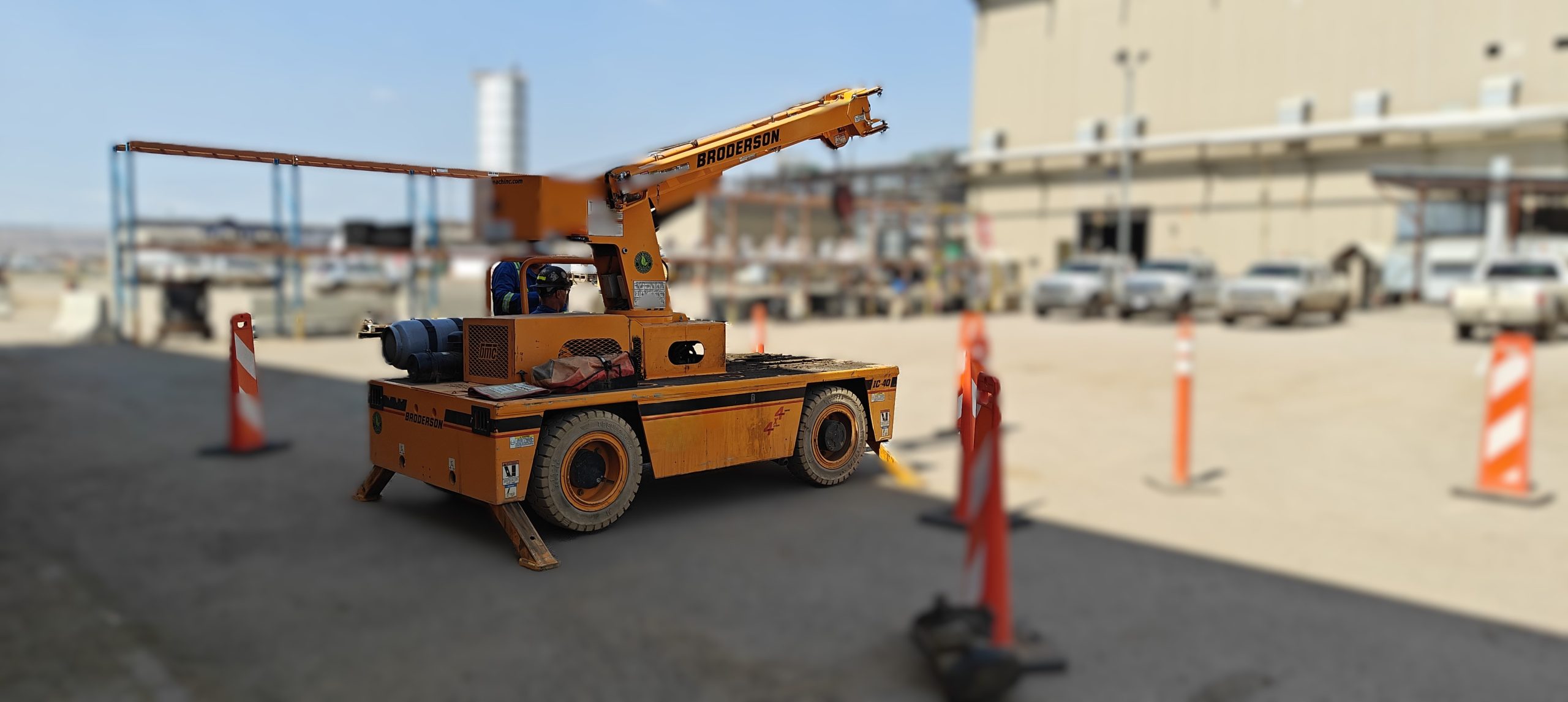
Broderson IC40 Operator Safety Training

From small capacity carry deck cranes up to 15-ton carry deck cranes, we can help you with your operator certification

From time to time we occasionally find ourselves being asked to provide operator certification on small carry deck cranes.

Broderson is a very well known brand of carry deck crane in the industry, there are other carry deck cranes from Grove cranes, Manitex and others, but we often see more Brodersons.

Today I had the great fun of working with a large group of millwrights and welders who will now be using the little baby Broderson IC40 to complete pump changes as well as valve and exchangers in Northern Alberta.

The crane also has a 10′ fixed jib that will be used from time to time and with that in mind, we also went over the entire rig process only to find out that the single, over-haul weight was missing.  

It does come with an LMI that was working perfectly and most of the folks who attended the training had familiarity with the crane and some ran it prior.

We went over the following items:

  • Pre-use inspections:
  • Boom
  • Boom tip
  • Hook block
  • Wire rope
  • Electrical
  • Crane body
  • Tires
  • Controls
  • Hydraulic system components
  • And much more

Even though the crane does not lift very much by comparison, it works in very tight areas where room is limited, margin of error is like any crane, nil and if the operators follow our three core fundamentals, along with good control, lift planning and their other rigging training (not by us), they have reduced their exposure to risk by a wide margin.

For more information or to find out about our carry deck crane program, contact us on our site HERE.