Mechanic Service Crane Stability

Mechanic Crane Stability is a topic we get all the time and unfortunately it’s also the least understood.

Many operators simply don’t understand the dynamics of crane stability well enough as they often don’t use the stabilizer on the mechanic service cranes at all!

There seems to be a threshold of when to use them properly and when it’s ok to “short-jack” the crane as they are lifting under xxx weight.  Ok so how does this get so confused anyway?  Lets look at the reason for stabilizer deployment in the first place:

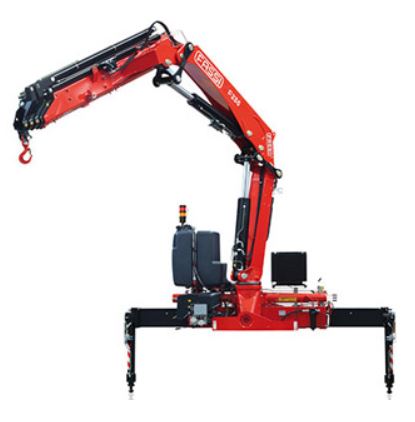
  1.  These are not “outriggers”, often a term used for the 2 legs that are deployed to prevent an unsafe lift.  Outriggers are typically used on larger cranes where there are 4 in total used to lift the crane up and unload the suspension of the crane for added counter ballast.
  2. The stabilizers are designed to simply stabilize the truck during the lift and prevent unsafe crane operation

Now we won’t split any hairs here, call the as you wish, we are simply working on the “why” not the “what”.  

So these smaller cranes typically will be installed by a service body installer as it’s not complicated stuff at all.  Then the body builder will take the unit once complete and do a stability test on it based on the SAE J765 standard of testing.  Also the crane manufacturer will provide all the details on how this is to be done AND recorded.

Now, given all that, when an owner or operator takes this out into the field, this is when it goes from good to not so much.  So what do I mean?

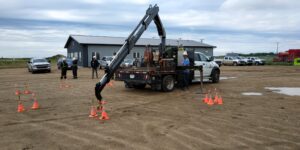
small crane training Lets assume the operator is working on a wheel loader with a transmission removal work order and the crane has to lift inside a cab.  Also it’s been raining out for a few days and the ground is soft.  So the transmission weighs in at 4,000 pounds, the crane is 6′ away from the unit and the operator DOES have both legs on the ground, life is good right!  

What about the soft ground beneath the crane and lack of stabilizer pads on that same soft ground?  Then the service body was changed to a taller one vs what the crane manufacturer recommends it to be for proper stability?  Note the taller the service body on a standard F550 Super duty (or chassis of preference) does impact the overall stability, taller bodies vs. shorter ones.

The technician lifts the transmission successfully out of the cab and swings it to the right and fails to have pulled out the moveable leg underneath the crane and pulls the truck over.  Now it sounds far fetched but is very much a situation we’d heard about a few months back.

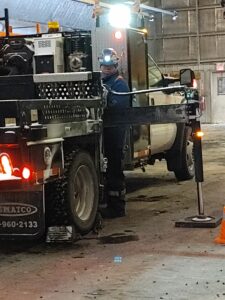
How does someone forget to deploy the moveable leg on such a heavy lift?  Habits my friends, habits also tied to the fact that many of these little mechanic service cranes have manual out and manual down stabilizers for a “cost savings” and given the fact the over the course of 6 months, the stabilizer beam (the part the leg is attached to), gets packed with road debris over time and makes it very difficult to pull out for proper use, the technicians give up on keeping it clean and operational.  

I’ve been in the field and know this first hand, while it does not make it even remotely right, I see the struggles they have and this is why I’m not a fan of the cheaper manual stabilizer leg kits.

Bottom line, how you do one thing is how you will do everything and if you continue to operate the crane in what is an unsafe manner, you will at some point, have an incident with the crane, recordable or not, it is preventable. Mechanic Service Crane Stability is not something you want to short cut on at all, there are far too many video on YT or other platforms that show what is the most often mis-used tool there is!

We now have an instructor led, virtual training program for these cranes, it has a theory section as well as practical that must be completed in order for you to become a certified operator.  Contact us for details and pricing HERE.


Picker Training in Fort McMurray Alberta

When it comes to picker training in Northern Alberta, right in the middle of one of the worst polar vortex’s on record…well you say yes and dress for the situation.  

When the call for knuckle picker training comes in January, you don’t say “it’s too cold outside”, you ask if there is a large shop available and trust in the process.

The old song sung at Christmas, “Oh the weather outside is frightful…”, does NOT come anywhere close to how bone chilling and equipment damaging these climates are.  But they don’t need to be and we show the folks just how to deal with the equipment side at least.

Luckily for me and the 12 operators who participated in our light duty knuckle picker training in Fort McMurray Alberta area. 

Thankfully we scored big time on having one of their contractors graciously allow us to use their shop (unheated but out of the bone chilling wind), for the 3 days we were up there daily temps did go up to -32 Celsius but the 35km/hr. winds made it much more…interesting.

TO that end part of our picker training is to advise the operators on what needs to happen to their lifts during these cold temps (derating) and how to properly cycle the crane after extended warm up periods if there is no tank heater installed on the crane (about 95% of these pickers do not have tank heaters), and of course safe operating procedures.

If you are in Northern Alberta or Southern Saskatchewan it matters not, we bring our program to you no matter the temps outside.  This is the reality and we take it as you do, life in the prairies.  We do it safely, we show the safety side in detail and leave your company with some solid SOP’s if there are none in place for the picker.

Send us an email HERE, we respond immediately (unless we are in the middle of a class theory or practical), and ensure you get the right information the first time.

Factory trained instructor, make no mistake this is invaluable for your operators.
 

Is Picker Training Mandatory?

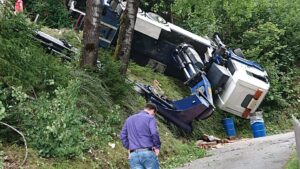
Knuckle Boom Crane AccidentIn Alberta, many people often ask us if  “certification” equals “qualification,” and, if not, what the difference is.

The main difference is the level of testing required. Qualification is done by the employer (think along the lines of competency), and may or may not involve formal testing; It is at the discretion of the employer’s qualified evaluator.

Certification requires third-party testing to provide a consistent and accurate means to determine a person’s technical knowledge and hands-on skills related to the task.

If you would like to know more or have more questions, such as: “Is picker training mandatory?”, or “do I have to recertify my picker operators every 3 years?”  All great questions and we get that a lot.

In Canada, there are provincial standards that are taken from the CSA standard or in some cases where there is no CSA standard, there may be an ASME standard used instead. Either way, every standard in the OHS provincial books are not all “mandatory”, but they ARE standards or best practices and should be considered a minimum standard to achieve.  Do you want to provide less than for your equipment or your operators?  It’s up to you!

So you don’t need to renew ANY of your certificates for any of your previous training, until something happens then of course the cost to address THAT will far outweigh the cost to recertify.

Think about getting a home built, would you want the builder to simply slap up some boards and sheeting, toss in a little insulation and some shingles and call it a day, hand you the keys and tell you to enjoy it.  For some it’s just a way of life, for us, cranes are a passion and we just won’t scrimp, nor should you.

Give us a call or send us an email to discuss your certification needs, nothing is mandatory, but safety!

(844) 334-8847   | EMAIL

Picker Operator Training

Hiab Picker Operator Training Our Light Duty Picker Training Program is Better Than Ever with Updates to Provide Your Company and Your Operators a FULL Day of Picker Training.

Our head instructor is a Factory Trained, Certified Operator Light Crane Trainer Who Worked in Austria, France and the U.S.A for Palfinger Cranes.

We travel the province of Alberta offering our light duty picker certification program and have received many, many compliments, reviews and return requests so you can rest assured that the information you learn from our HIAB operator training course is on point, on target and on budget!

Our picker operator training program is fully compliant with ALL provincial Occupational Health and Safety standards as those are taken from the CSA standard that applies to folding boom cranes in Canada.

We do offer a range of crane training programs for the different types of cranes, knuckle boom pickers, small micro cranes, mechanic service cranes and carry deck cranes as well (Broderson brand) to name but one type of carry deck crane.

Our on-site training brings everything to your shop or office, no matter where in Alberta, Saskatchewan or Northwest Territories and we provide your company with full summary, full documentation of the programs and much more. 

Contact us for pricing and details as well by email us HERE.


Crane Operator Safety Program – COVID Update

COVID and Operator Training Changes for the Balance of ’20 and Into 2021

With all of the changes that have happened and likely the ones to come throughout the winter season, our crane operator safety program has been updated to reflect these new COVID updates.

We are continuing to follow the guidelines as set by Alberta Health with respect to keeping safe distances apart.

In a scenario whereby you might have 6 operators, your shop or office area needs to be able to accommodate that spacing requirement for the morning theory sessions.

The afternoon practical is done in the same manner that it has always been, for example, the safety walk around, inspections and such are conducted with proper spacing and if necessary, masks depending on your companies policy around this procedure.  We do wear safety gloves regardless and typically PPE is always used so the afternoon portion is generally status quo.

We do NOT have a online version as the practical is still an integral part of the operator safety program and we have been advised that these protocols and COVID safety standards will be with us well into 2021, so to that end it simply would not be efficient.

We do bring masks and latex gloves as well as hand-sanitizer to all of our program sessions.

Feel free to contact for more information HERE or call us at (844) 334-8847


Alberta Companies Working in BC – Crane Certification Update

Shown unfoldedWe are able to provide training to ALBERTA based customers doing crane work in BC.

So what does that mean?  If your crane on your truck has a capacity of LESS than 5-tons initial pick capacity, and your crane has LESS than 30′ of hydraulic reach, we are able to provide you with full certification.

Should your crane EXCEED these specifications, then you would be required to take a BCACS crane certification program.

The whole premise is not unlike here in Alberta, if your picker lifts less than 8-tons (initial pick) and does NOT have an attached winch that is capable of a 9,000lb single line pull (similar to a carry deck type crane or other larger cranes that have a limiter).

For more information on the process or to book a picker safety course, please contact us at 403-606-0603 or send us an email by clicking HERE.

To look at our frequently asked question page of our site, please click HERE and it should help you with many more questions.