Crane Apprenticeship Program vs One Day Crane Safe Operating Certificate: What’s the Difference?

– A crane apprenticeship program provides comprehensive training and on-the-job experience for aspiring crane operators, lasting several years.
– A one-day crane safe operating certificate offers a basic understanding of crane operation and safety but may not provide the same level of expertise as an apprenticeship program.
– Light crane programs in Alberta, Canada, focus on specific types of cranes and provide specialized training for operators.
– A trade school program for crane operation typically requires six weeks of attendance and covers a broader range of crane types and applications.

Introduction
If you’re interested in becoming a crane operator, you may have come across two options: a crane apprenticeship program or a one-day crane safe operating certificate. But what’s the difference between the two, and which one is right for you? In this article, we’ll break down these options in simple terms that any grade 9 student can understand.

We’ll specifically look at the light crane programs available in Alberta, Canada, and compare them to a trade school program that takes six weeks of attendance. By the end, you’ll have a clear understanding of the distinctions between these programs and be better equipped to make an informed decision about your crane operator training.

TLDR

Crane Apprenticeship Program: Building Expertise over Time
A crane apprenticeship program [2] provides aspiring crane operators with comprehensive training and on-the-job experience. Unlike a one-day certificate, an apprenticeship program lasts several years and allows individuals to develop the necessary skills and expertise to operate various types of cranes safely.

During a crane apprenticeship program, participants work under the guidance of experienced crane operators, learning the ins and outs of crane operation, maintenance, and safety protocols. This hands-on experience is invaluable, as it allows apprentices to apply their knowledge in real-world scenarios and gain practical skills that can’t be obtained in a one-day training session.

Apprenticeship programs also typically include classroom instruction, where participants learn about crane theory, safety regulations, and industry best practices. This combination of classroom learning and on-the-job training ensures that apprentices are well-rounded and prepared for the demands of the job.

One-Day Crane Safe Operating Certificate: A Basic Introduction
On the other hand, a one-day crane safe operating certificate [3] offers a more basic introduction to crane operation and safety. This type of training is often suitable for individuals who require a basic understanding of crane operation for their job or those who want to explore crane operation as a potential career path.

A one-day certificate program covers the fundamental principles of crane operation, including basic controls, load capacity, and safety procedures. While it provides participants with a basic level of knowledge, it may not offer the same depth of expertise as an apprenticeship program.

It’s important to note that a one-day crane safe operating certificate may be a suitable option for individuals who need to operate light cranes or perform simple lifting tasks. However, for those looking to operate more complex or heavy-duty cranes, additional training and experience may be necessary.

Light Crane Programs in Alberta, Canada: Specialized Training
In Alberta, Canada, there are specific programs known as light crane programs [5] that focus on training operators for specific types of cranes. These programs provide specialized training tailored to the needs of operators who primarily work with light cranes, such as mobile cranes or tower cranes.

Light crane programs offer a combination of classroom instruction and practical training, ensuring that participants have a thorough understanding of the specific crane types they will be operating. These programs typically cover topics such as crane setup, load handling, safety protocols, and equipment maintenance.

By focusing on specific crane types, light crane programs allow participants to develop specialized skills and expertise that are highly sought after in industries where light cranes are commonly used. This targeted training can enhance job opportunities and career advancement prospects for crane operators in Alberta, Canada.

Trade School Program: Comprehensive Training in Six Weeks
If you’re looking for a more comprehensive crane operator training program, a trade school program [4] may be a suitable option. These programs typically require six weeks of attendance and cover a broader range of crane types and applications.

Trade school programs provide participants with in-depth knowledge of crane operation, safety protocols, and industry regulations. Participants learn about various crane types, including mobile cranes, tower cranes, and overhead cranes, and gain hands-on experience operating these different types of equipment.

In addition to crane operation, trade school programs also cover related topics such as rigging, load calculations, and equipment maintenance. This comprehensive training equips participants with a well-rounded skill set that prepares them for a wide range of crane operation scenarios.

While trade school programs may require a longer time commitment than a one-day certificate, they offer a more in-depth and comprehensive training experience. This can be beneficial for individuals seeking a thorough understanding of crane operation and aiming for long-term career growth in the field.

Conclusion
In summary, the difference between a crane apprenticeship program and a one-day crane safe operating certificate lies in the depth and duration of training. A crane apprenticeship program provides comprehensive, long-term training and on-the-job experience, while a one-day certificate offers a basic introduction to crane operation and safety.

In Alberta, Canada, light crane programs focus on specific crane types and provide specialized training for operators. On the other hand, a trade school program offers comprehensive training in various crane types and applications, typically requiring six weeks of attendance.

When deciding which option is best for you, consider your career goals, the types of cranes you wish to operate, and the level of expertise you aim to achieve. By choosing the right training program, you can embark on a rewarding career as a crane operator.

FAQs:
1. What is the benefit of a crane apprenticeship program?
– A crane apprenticeship program provides comprehensive training and on-the-job experience over several years, allowing individuals to develop the necessary skills and expertise to operate various types of cranes safely. This program offers a more in-depth and comprehensive training experience compared to a one-day certificate.

2. Are one-day crane safe operating certificates sufficient for all crane operations?
– One-day crane safe operating certificates offer a basic introduction to crane operation and safety. While they may be suitable for individuals who need to operate light cranes or perform simple lifting tasks, additional training and experience may be necessary for operating more complex or heavy-duty cranes.

3. What are light crane programs in Alberta, Canada?
– Light crane programs in Alberta, Canada, are specialized training programs that focus on training operators for specific types of cranes, such as mobile cranes or tower cranes. These programs provide targeted training tailored to the needs of operators working with light cranes.

4. How long does a trade school program for crane operation typically last?
– Trade school programs for crane operation typically require six weeks of attendance. These programs provide comprehensive training in various crane types and applications, covering topics such as crane operation, safety protocols, rigging, and equipment maintenance.

5. Which training option is best for long-term career growth in crane operation?
– For long-term career growth in crane operation, a crane apprenticeship program or a trade school program may be the most beneficial. These programs provide comprehensive training and equip individuals with the necessary skills and expertise to pursue a successful career as a crane operator.

LINKS:
Spider Crane Training and Certification in Alberta

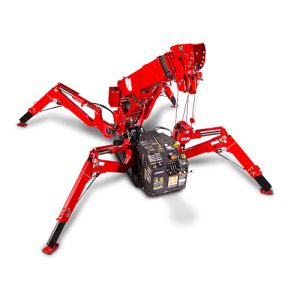
We have now worked with 13 different companies to help them train their employees and obtain spider crane training and certification in Alberta and Saskatchewan on the safe use of the mini crawler crane as more brands enter the market here in Western Canada.

Spider Crane

The most well known and popular brand is the Spider crane, but we are seeing others like HOEFLON cranes, Maeda and Jekko begin to make entry points and grow their market share over time.

Each type has it’s unique benefits and properties but the biggest advantage to all of them…relative small size, but powerful lift capabilities and the ability to maneuver in spaces other cranes simply can’t get into.

Operating these cranes using remote control primarily, and they do have controls on the base for movement and crane controls but the advantage to remote is full autonomy and visibility of the load being handled by these powerful little cranes.

Adding to the versatility of these already compact cranes is that you can add attachments to them such as:

  • Jib
  • Glass handler vacuum
  • Searcher hook on Jib
  • Pallet forks
  • Hydraulic manipulator arm
  • And more as the manufacturers come out with other solutions as shown HERE.

Learning to operate mini crawler cranes and obtain your certification is key to keeping your operating costs down and protect your employees and your equipment.

Another brand HEOFLON is in the market and known for their fully electric version of these cranes.  The majority are either LPG (propane), diesel but only a few are fully electric.  HOEFLON has some very unique products to offer their customers like the TC1 or tracked carrier unit that boasts some impressive carry load on the small unit.

We are glad and fortunate to be a part of the spider crane or mini crawler crane market in Alberta and do our part to ensure the operators understand and use these mighty cranes, safely.

For more information or to book a training at your location, contact us HERE

Light Duty Crane Training in the Heartland of Alberta

Light Duty Crane Training in the Heartland of Alberta, providing our services for many years is always a pleasure.

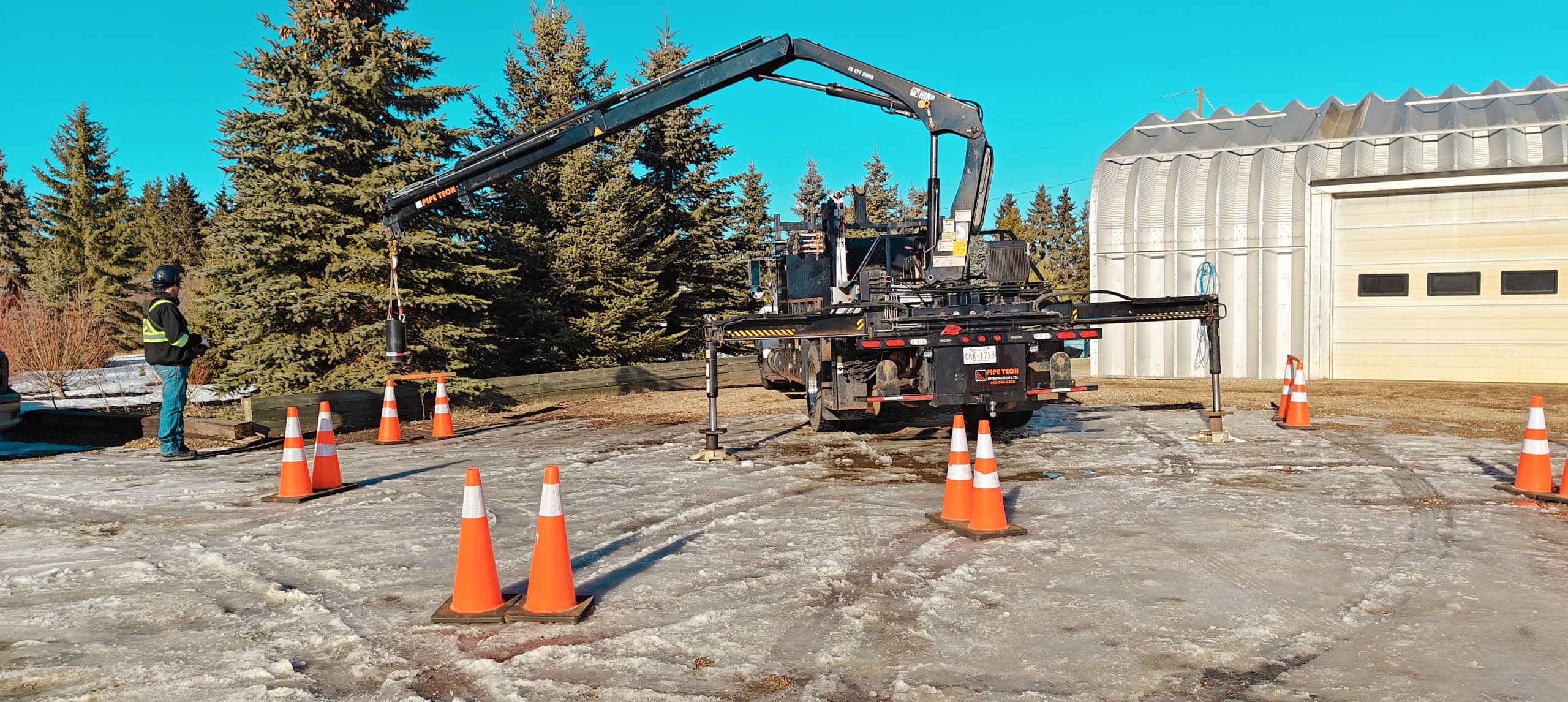
We have great customers all throughout western Canada and the folks at Pipe Tech Integration in Stettler are amongst those awesome customers.

Pipe Tech specializes in piping and maintenance throughout Western Canada and this is my second time working with their operators and it’s by my estimate, a top-notch company operating clean, organized and well maintained equipment.

Their business website is HERE and take the time to see it through but with their newest crane, a rear mount HIAB 077 it gives them even more capability, reach and flexibility to get into different areas.

That said, when I get a call from our customers in rural areas, these trips out are the best, while winter is still here in Alberta, it’s been mild and roads are in great shape.

We get to meet with a lot of great people who understand and appreciate light duty crane safety and for the most part, a reminder of how using the crane in the wrong manner can be detrimental.  While it’s an imperfect world, we know the risks we take on, but our program is designed to help mitigate those same risks as much as possible, while offering due diligence ,use of checklists, pre-use checks of the crane and much more, we don’t cover rigging and load control, our programs are always about crane control first, load control second.

If your company is in the Stettler area and you want more information or pricing details about our program, give us a call at [587] 209-2589 or send us an email HERE. 

Light Duty Crane Training in Alberta: Ensuring Safety and Compliance

Light Duty Crane Training in Alberta: Ensuring Safety and Compliance

Discover the importance of light duty crane training in Alberta and how knuckle boom pickers, carry deck cranes, spider cranes and mechanics service crane safety training can ensure compliance with CSA Z150.3 (2022) and Alberta OHS section 6 standards. Learn about the convenient one-day course that can be conducted at your location.

**Related Keywords**: knuckle boom pickers, dec cranes, spider crane safety training, one-day course, CSA Z150.3, Alberta OHS section 6 standards

TLDR:

– Light duty crane training is essential for ensuring safety and compliance in Alberta.
– Knuckle boom pickers and spider crane safety training courses provide operators with the necessary skills and knowledge.
– The one-day course can be conducted at the customer’s location for convenience.
– Compliance with CSA Z150.3 and Alberta OHS section 6 standards is crucial for maintaining a safe work environment.

Introduction:

When it comes to operating light duty cranes in Alberta, safety should always be the top priority. Proper training and adherence to safety standards are essential to prevent accidents and ensure compliance with regulations. One of the most effective ways to achieve this is through light duty crane training, specifically focusing on knuckle boom pickers, carry deck and spider cranes.

The Importance of Light Duty Crane Training:

Light duty crane training plays a vital role in equipping operators with the necessary skills and knowledge to safely operate knuckle boom pickers and spider cranes. These training courses cover a wide range of topics, including crane stability, load calculations, and proper use of the hydraulic system, remote controls, load charts, stability, boom configuration, etc. By understanding these key areas, operators can minimize the risk of accidents and injuries in the workplace.

Convenient One-Day Course at Your Location:

To make light duty crane training more accessible and convenient, there are one-day courses available that can be conducted at the customer’s location. This means that operators can receive the necessary training without having to travel to a separate training facility. The training providers will bring the course to you, utilizing your crane to ensure operators are already familiar with the equipment they will be working with.

Compliance with Safety Standards:

During light duty crane training, operators will learn about and be expected to comply with safety standards, such as CSA Z150.3 and Alberta OHS section 6 standards. These standards outline the requirements and guidelines for safe crane operation, ensuring that operators understand their responsibilities and the necessary precautions to take. By adhering to these standards, companies can create a safer work environment and reduce the risk of accidents and injuries.

Conclusion:

Light duty crane training is crucial for ensuring safety and compliance in Alberta. The use of knuckle boom pickers and spider cranes requires specialized training to minimize accidents and promote safe operations. By participating in a one-day training course conducted at your location, operators can gain the necessary skills and knowledge to operate these cranes safely. Compliance with CSA Z150.3 and Alberta OHS section 6 standards is essential for maintaining a safe work environment. Invest in light duty crane training to prioritize the safety of your operators and promote a culture of compliance.

[H2] FAQs:

1. Why is light duty crane training important?
– Light duty crane training is important to ensure the safety of operators and compliance with regulations. It equips operators with the necessary skills and knowledge to operate knuckle boom pickers, carry deck and spider cranes safely.

2. What topics are covered in light duty crane training?
– Light duty crane training covers a range of topics, including crane stability, load calculations, and proper use of the hydraulic system. These topics are essential for safe crane operation.

3. Can light duty crane training be conducted at our location?
– Yes, there are one-day training courses available that can be conducted at your location. This allows operators to receive training without having to travel to a separate training facility.

4. What safety standards should operators comply with?
– Operators should comply with safety standards such as CSA Z150.3 and Alberta OHS section 6 standards. These standards outline the requirements and guidelines for safe crane operation.

5. How does light duty crane training contribute to a safer work environment?
– Light duty crane training ensures that operators have the necessary skills and knowledge to operate cranes safely. By adhering to safety standards and best practices, companies can create a safer work environment and reduce the risk of accidents and injuries.

Please contact us today by sending us an email HERE

What Defines Critical Lift with a Crane?

What Defines a Critical Lift with a Crane?

When it comes to crane operations, safety is of utmost importance.

One key aspect of crane safety is understanding what constitutes a critical lift. In this blog post, we will explore what defines a critical lift with a knuckle boom crane and the precautions that need to be taken.

Understanding Critical Lifts…

A critical lift refers to a rigging activity that requires planning and additional safety measures to minimize the risk of crane failure or accidents [1].

It typically involves lifts that exceed certain thresholds in terms of load capacity, lift configuration, or proximity to hazardous areas.

Load Capacity Thresholds

Different sources provide varying percentages for load capacity thresholds that define a critical lift. For example, one source mentions that a critical lift occurs when the load being lifted exceeds 90% of the rated capacity of the mobile crane or boom truck [2].

Another source states that any lift exceeding 80% of the crane’s rated capacity within its specific configuration can be considered critical [4].

It’s important to consult industry-specific guidelines and provincial regulations for accurate information on load capacity thresholds pertaining to knuckle boom cranes in your province.

Lift Configuration and Proximity

Apart from load capacity, other factors related to lift configuration and proximity may also define a critical lift:

1. **Boom Length**: A critical lift can occur if the length of the boom used for lifting exceeds certain limits specified by manufacturers or industry standards.
2. **Boom Angle**: The angle at which the boom is positioned during lifting plays a crucial role in determining whether it falls under the category of a critical lift.
3. **Work Area**: If any part of the knuckle boom crane’s boom or attachment operates within close proximity (e.g., within 6 meters or 20 feet) of hydrocarbon or pressurized piping areas, it may be considered a critical lift [5].

Precautions and Safety Measures

Performing critical lifts with ‘knuckle boom’ cranes requires detailed planning and full adherence to safety protocols. Here are some precautions that should be taken:

1. **Comprehensive Planning**: Before undertaking a critical lift, a detailed plan should be developed, considering factors such as load weight, rigging techniques, lift configuration, and potential hazards.
2. **Additional Safety Measures**: Critical lifts often necessitate additional safety precautions beyond standard lifting operations. These measures may include using specialized rigging equipment, employing multiple cranes for tandem lifts, or implementing enhanced communication systems.
3. **Qualified Personnel**: Only trained and certified crane operators and riggers should be involved in critical lift operations.
4. **Regular Inspections**: Regular inspections of the knuckle boom crane should be conducted to ensure its optimal condition and identify any potential issues that could compromise safety.

Conclusion

In summary, a critical lift with a ‘knuckle boom’ crane, any crane to be forthright, is defined by various factors such as load capacity thresholds, lift configuration parameters (boom length and angle), and proximity to hazardous areas, environmental, ground conditions, operator skillset, tandem crane lift, unknown load, unbalanced load, etc.

To ensure safe operations during critical lifts, comprehensive planning, additional safety measures, qualified personnel, and regular inspections are essential.

Remember to consult industry-specific guidelines and regulations for accurate information on critical lifts with knuckle boom cranes in your region.

Lift safe!

*Note: The images used in this blog post are for illustrative purposes only.*

Sources:
1. R. Baker & Son – What is a Critical Lift? 
2. BC Crane Safety – Critical Lifts
3. US Army Corps of Engineers – EM 385-1-1
4. SafetyInfo – Workplace Safety Program
5. HSSE World – Critical Lifts
6. Astro Crane – What is Meant by a Critical Lift?

Feel free to contact us HERE for more information or to book an ON-SITE training.


The Importance of Proper Equipment Operator Safety Training: Ensuring Compliance and Efficiency

Discover the necessity of equipment operator safety training for cranes lifting over 2000kg.

Explore the benefits of picker training and certification in Alberta, including light duty crane training and 1-day light crane certification.

  • Proper equipment operator safety training is crucial for cranes lifting over 2000kg to ensure compliance with industry regulations.
  • Picker training and certification in Alberta provides operators with the necessary skills and knowledge to operate light duty cranes safely.
  • Light duty crane training programs offer efficient and comprehensive training in just one day, leading to light crane certification and improved job performance

Introduction

When it comes to operating heavy machinery, safety should always be a top priority. In industries where cranes are used to lift loads weighing over 2000kg, proper equipment operator safety training is not just recommended—it’s mandatory. Although some operators may initially resist the idea of training, it is essential for both their safety and the overall efficiency of the operation [1].

The Need for Equipment Operator Safety Training

Operators of cranes lifting over 2000kg must undergo proper training to ensure compliance with industry regulations. These regulations are in place to protect both the operators and those working in the vicinity of the crane. By receiving adequate training, operators gain the necessary knowledge and skills to operate the equipment safely and effectively.

Picker Training and Certification in Alberta

In Alberta, picker training and certification programs are available to equip operators with the skills required to operate light duty cranes. These programs focus on teaching operators how to handle the specific challenges and risks associated with operating light duty cranes, ensuring they are well-prepared for the job [3].

Picker training and certification in Alberta covers a wide range of topics, including:

  1. Crane operation techniques: Operators learn the proper techniques for operating light duty cranes, including load handling, manoeuvring, and positioning.
  2. Safety protocols: Participants are educated on safety regulations, hazard identification, and emergency procedures to ensure a safe working environment.
  3. Equipment maintenance: Proper maintenance and inspection procedures are taught to ensure the crane remains in optimal working condition, reducing the risk of accidents and breakdowns.

By completing picker training and certification in Alberta, operators gain the confidence and competence needed to handle light duty cranes safely and efficiently.

Light Duty Crane Training: Efficient and Comprehensive

Light duty crane safety training programs are designed to provide operators with the necessary skills and knowledge in a concise and efficient manner. These programs offer comprehensive training that covers all aspects of operating light duty cranes, including safety protocols, equipment operation, and maintenance.

One notable advantage of light duty crane training is the ability to complete the program in just one day. This condensed time-frame allows operators to receive the training they need without disrupting their work schedules excessively. By dedicating a single day to training, operators can quickly gain the knowledge and skills required to obtain their light crane certification.

Benefits of 1-Day Light Crane Certification

Obtaining a light crane certification through a 1-day training program offers several benefits for both operators and employers. These benefits include:

  1. Compliance with regulations: By ensuring that operators are certified to operate light duty cranes, employers can remain compliant with industry regulations and avoid potential penalties.
  2. Enhanced safety: Proper training reduces the risk of accidents and injuries, creating a safer working environment for both operators and other personnel on the job site.
  3. Improved job performance: Certified operators are more knowledgeable and skilled in operating light duty cranes, leading to increased efficiency and productivity.
  4. Professional development: Light crane certification demonstrates an operator’s commitment to professional growth and development, enhancing their career prospects.

Conclusion

Proper equipment operator safety training is a necessity for cranes lifting over 2000kg. In Alberta, picker training and certification programs provide operators with the skills and knowledge they need to operate light duty cranes safely and efficiently. With the option of completing a 1-day light crane certification program, operators can quickly obtain the necessary training and certification to comply with industry regulations and enhance their job performance.

FAQs:

  1. Why is equipment operator safety training necessary for cranes lifting over 2000kg? Equipment operator safety training is necessary to ensure compliance with industry regulations and protect the safety of operators and those working in the vicinity of the crane.
  2. What is picker training and certification in Alberta? Picker training and certification in Alberta is a program designed to equip operators with the skills and knowledge required to operate light duty cranes safely and efficiently.
  3. How long does it take to complete a light duty crane training program? Light duty crane training programs typically offer comprehensive training in just one day, allowing operators to quickly gain the necessary skills and knowledge.
  4. What are the benefits of obtaining a 1-day light crane certification? Obtaining a 1-day light crane certification ensures compliance with regulations, enhances safety, improves job performance, and demonstrates a commitment to professional development.
  5. How can equipment operator safety training benefit employers? Equipment operator safety training benefits employers by ensuring compliance with regulations, creating a safer working environment, and improving overall job performance.

Contact us HERE for more information on our crane safety training and certification programs.