Saskatchewan Knuckle Picker Training

Some more clarity on what is necessary in Saskatchewan for small knuckle picker requirements:
Per Sask OH&S, small knuckle pickers (less than 5.5-ton), and fall under PME or power mobile equipment.

Now I had the talk about “crane” definition but because the cranes we provide training on are LESS than 5-tons, it defaults to PME.
SO…that is section 153, part 11 and if you go further and look at table 14.1, it states the company has to ensure the operator is “competent” and provide proper tools and training to ensure the safety of that operator and those surrounding the operator.

The Boom truck “A” and Boom truck “B” program applies to ‘stiff boom’ type cranes, be they carry deck, truck mounted etc.  They DO NOT apply to the HIAB, Palfinger, Fassi, Ferrari, Amco Veba type cranes at all, even though they are mounted on a chassis.

I had this confusion cleared up on March 17, 2017 by a very informed OH&S officer who was very gracious and took all the time necessary to ensure clarity.

It all boils down to the apprenticeship board has nothing to do with this, it’s regulated by OHS in Saskatchewan, as it is in Alberta, Manitoba, and most everywhere except BC and Ontario.

So, if you need training for light duty knuckle pickers, we do that.  Give us a call at (844) 334-8847 and we can get your operators trained and be sure to be OH&S compliant.

or send us an email at info [at] KnuckleBoomTraining [dot] ca or click HERE

Knuckle Boom Picker Remote Controls

If you work a lot by yourself, there should not be any argument at all.  Your safety and the safety of anyone surrounding your crane is THE most important thing.  Operating a crane remotely has all the advantages and more:

1. You are going (walking, never riding) with the load to it’s final spot. You have full control over the load and a clear view of where it needs to be.  Thus ensuring true “safe” delivery of the load being handled. If anything were to happen to the crane truck by whatever means, you are not standing beside the truck, you are far enough away.  Yes always take precautions, do site analysis, use proper stabilizer pads, test the ground for proper support prior, etc.  BUT, given the knuckle booms cranes propensity for diversification, I’d rather be where the load is, not where the truck is for OPTIMUM control.

2. You are away from the crane truck.  ALL remote controls now have the ability to shut down the crane in the event of a “situation” where full stop is necessary using the eSTOP or deadman button on each and every remote.  There are 1000’s of cranes in use today with manual control stations that DO NOT have an ability to shut the crane down in an emergency, aside from opening the door of the truck, locating a PTO switch and or crane electric switch and hopefully shutting the crane down before anyone is seriously hurt or worse, in less than 5-seconds!

3. Operator CapAbility Using Remote Control:

  • Start and Stop – Controlling the truck engine as far away as 100 Meters.  The advantage is if the crane is kept on site for extended periods, the operator is up on a roof or in a building, he/she can shut the unit off until the job is complete and they are then able to return to the crane truck to make ready for road transport.
  • Engine Throttle Control – Preset engine RPM for optimum flow control (More than the preset RPM and you are just burning fuel and creating unnecessary heat).  Cranes operate better at maximum flow vs. at idle.  There are also load-sensing pumps in use that will provide the automatic speed control of the engine as well.
  • Pre-set Crane Speed – Choices for a full range of operators, from as slow as 25% of normal speed to 100% or full flow.  Giving a broad range of control and training speeds for optimal load handling scenarios.  The remote controls are fully proportional, meaning for every minor or major operator input on the levers, the same is given on the output of the crane.
  • Boom Oscillation Control – Some manufacturers offer a feature available only with a remote control.  The ability to balance the oscillations of the crane boom, meaning that even the poorest of operators will look like a pro as the crane automatically eliminates most of the “boom bounce” associated with less than stellar operator input.  It’s actually a structural saver as well.  A better description with video is available HERE.
  • Stabilizer Control – While this sounds bad, in-fact, it’s far safer.. It requires the operator to switch channels on the remote from crane control to outrigger control, thus eliminating any prospect of operating the stabilizers at the same time as the crane.  Always safety here and for owner/operators, It’s a time saver and must have IMHO.
  • Multiple Channels – on a single remote unit.  Outside of North America, many crane companies with multiple articulated cranes in the fleet, will use attachments on the crane to increase the utilization of the crane, generating better revenues instead of what we have in North America.  It’s very simple and safe to switch between channels to operate other systems from a single, hand held remote control system
  • SAFETY – In the event that other cranes come on site with a remote control system as well, and should your crane (rare as it is, but could happen) receive a signal from another remote on the same frequency, the safety system is designed that your crane would come to a complete stop, each remote has a unique identifier and if your crane stops, it’s not because it’s a piece of S**T, contrarily it’s actually telling you something.  Engage the eSTOP function, do a crane inspection (could also have a weak/dead battery, broken antenna on the receiver), etc.
  • Maintenance – A high value component.  Doing a daily boom inspection (you are doing it right?…weekly?…monthly?…EVER?…In order to do a thorough boom inspection at your company, the operator needs to extend the boom and someone should be walking parallel to the boom to see as it extends, are there any unusual “visual” faults? Any operational faults?  It is not possible to see how the boom extends while standing beside the manual control station and watching, human eyes are good but not that good.  So you then require 2 people, higher cost per hour to your company.  Lubricating the slewing/rotation system – it is necessary to un-rack the crane and slowly rotate the crane as grease is pumped into the zerk fittings.  Not doing this will simply pack a lot of grease into a small section of the turret bushing and the rest will be dry.  Not only this, but it’s likely you will have pushed grease up and through the upper grease seal and what happens when you open up a seal to the elements? Yep, a whole other problem now exists.

Now for the Not so Safe Part:

  • Untrained operators using the remote and then standing under the boom/load.
  • Untrained operators riding the load as they think it’s…fun
  • Untrained operators not doing weekly testing of their remote safety features and finding out at the wrong time something isn’t doing what it’s supposed to do.
  • Poorly maintained, older style remotes that have improperly adjusted potentiometers in the hand held that no longer offer the proportional control
  • Cable back cords that are so badly twisted up from improper storage that wires inside have broken from twisting they no longer work properly.
  • eSTOP button has been removed or deactivated by soldering the wires together as the owner was to “frugal” to replace that $55.00 safety switch.

SUMMARY – There are more advantages vs. disadvantages,  I’ve only touched on a few of them.  I can’t list them all here in this one post. I suggest you talk with your local crane company sales person who can give you the full monty on this safety system.

I strongly believe that having a remote control on your crane will save time, money, increased productivity but most of all, vast increase in operator safety on top of what is already the safest cranes in the world.

Mechanic Service Crane Training

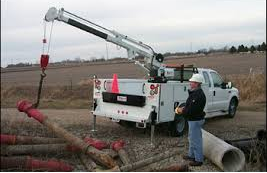
What is wrong with this?

When I see brochures for companies, naturally I gravitate to the picture, simply to see if the operator is doing more than just posing for a photo.  You see I believe that safety, ALL facets of safety should be adherence no matter what the circumstance.  Even if it is for photo opp that a company wants to use to sell its services to another company.

I get what the picture was to show, a product installed on a truck to showcase the crane and possibly the body the crane sits on top of, but this is not the right way to showcase your stuff.  Take the time,

In that regard, it is more prevalent for the picture to be even better controlled.  In the included picture, lets just look at it and see what we see:


  1. Operator is not standing in the right place, always operate the crane outside of the in-use radius of the crane.  Large trip hazard behind him
  2. Crane does not have the proper use of stabilizer legs, the installed side of the crane always has an extendible stabilizer beam, picture or not, it should be used.
  3. Stabilizer legs do not have pads underneath them.  Do you really know how much pressure is exerted under the foot?
  4. Truck does not have wheel chocks in place.  Always on the crane install side
  5. Mark off the working area, that pylon in the bed is useless, put it where it needs to be.

Knuckle Boom Crane Training Program

HIAB Picker Operator Training

In our industry, most knuckle boom cranes get called “HIAB” cranes or pickers.  If you want to get technical, they are actually called: Truck Mounted Articulated Loader Cranes, but whatever you want to call them is fine with us.

HIAB is a well known brand and all the other manufactures in Alberta have been fighting for market share against HIAB for a long time.  Palfinger is likely the second most recognized brand in our provinces as over the past few years the dealers have done a fantastic job of growing their market share accordingly.  HIAB picker trucks are most commonly cranes installed either behind the cab (BOC), or mid-mount behind a vertical tool box, usually called a “coffin box” for short, then the picker, then a deck with a flip over 5th wheel (or fixed) and were mostly installed on Ford F550 trucks but now with newer chassis coming out that seem to be able to withstand the beating they usually take.  Lets face it, Alberta secondary roads are not nice to anyone’s gear so this is a cost of doing business in the “patch” for sure.

We get asked a lot about our picker crane operator training program we have and we are always upfront with everyone, “this program is voluntary only” ,there is no regulation or requirement to have your operators certified, ticketed or otherwise in AB, SK or MB UNLESS, unless your HIAB picker lifts more than 8-tons in Alberta.  In Saskatchewan they have changed the program yet again and have made it more confusing, but it’s now 0-15 tons, your operator is supposed to go through a 40-hour training program, put on by the apprenticeship board last we heard.  This may have changed again as we called them and no one could give us an answer that made sense, so we continue to provide our services in Sask until told otherwise.

So no matter the crane you have installed on your truck, Fassi, Palfinger, HIAB, Ferrari, Amco Veba, Atlas, Copma, Effer, etc, our knuckle crane training program was designed to meet your needs.  We provide a picker operator safety certificate and wallet card as well for your records and in PDF if you want to send to your contracts.

So if someone tells you that your operators need to be certified or ticketed, it’s likely due to one of the operators COR safety requirements and it’s not at all a bad thing is it?  Many times over when we do a training we get a lot of the same questions and responses, being that even the most experienced picker operator learns something and that is our end goal.  To instill safety and long term ownership of the picker truck so that the owner can get the best out of their operators and their gear.

If you have any questions on what is what or just to find out our pricing, needs, etc, call us at (877) 200-8715 or send us an email buy clicking HERE.  We’ll do our best to back to you within an hour or two. 

Knuckle Picker Crane & Rigging Safety Program for Western Canada

We are pleased to announce an agreement has been reached between 2 of Alberta’s Best Training Companies, and you, our customers will see BIG changes.

Cranemasters Overhead Crane & Rigging Training along with The Crane Safety Group (AB) out of Calgary have teamed up to provide your company with a brand new, 2-day training program that will bring over 50-years of combined knowledge to your facility.

The Crane Safety Group (AB) has been instructing on all brands of truck mounted, knuckle boom cranes with a lift capacity of LESS THAN 8-tons in AB (5.5 Tons, SK), as well as MB, NWT & YT.  The program provides a foundation that will give your operators a complete and thorough understanding of how to use your picker truck safely, set up, operation and lifting best practice using the rigging training provided by Cranemasters in Alberta for the past XX-years.

Cranemasters has been providing overhead crane & rigging training in Western Canada and has been proven to be a leader in rigging safety & lifting practices as well as their overhead crane training program.

The program will be held over 2-days at Cranemasters location in either Edmonton or Calgary.  The first day will be theory and practical on the knuckle boom crane, an exam will be given on both theory and practical after each session.  A mark of 85% is required to for the operator to pass.

We believe that this new team will open up a new ability for your company to give your operators the best possible operator training there is in Canada as of the date of this.  We strive to stay on top of all regulations and ensure your company receives nothing but the best there is.

There will be a crane truck available for a small added fee or bring your own.  

All cranes must be in good operating condition, be certified for that year (MPI), and pass a pre-exam inspection.

For more information on this or any of our combined programs, please call: (877) 200-8715


9 New Sigalarm Units on Sidebooms

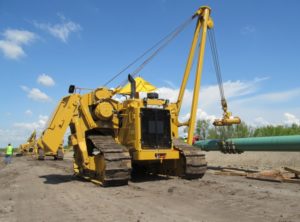
 Side boom Crane for Pipelines
Sigalarm install on 9-sidebooms as posted in Facebook.  The sideboom/pipeline industry has had it’s fair share of “incidences” regarding power-line strikes and such.
As wired or wireless system will provide your project with piece of mind in terms of operator and equipment safety that you simply can’t get anywhere else.