Palfinger Launches New Large Crane PK 200002 L SH

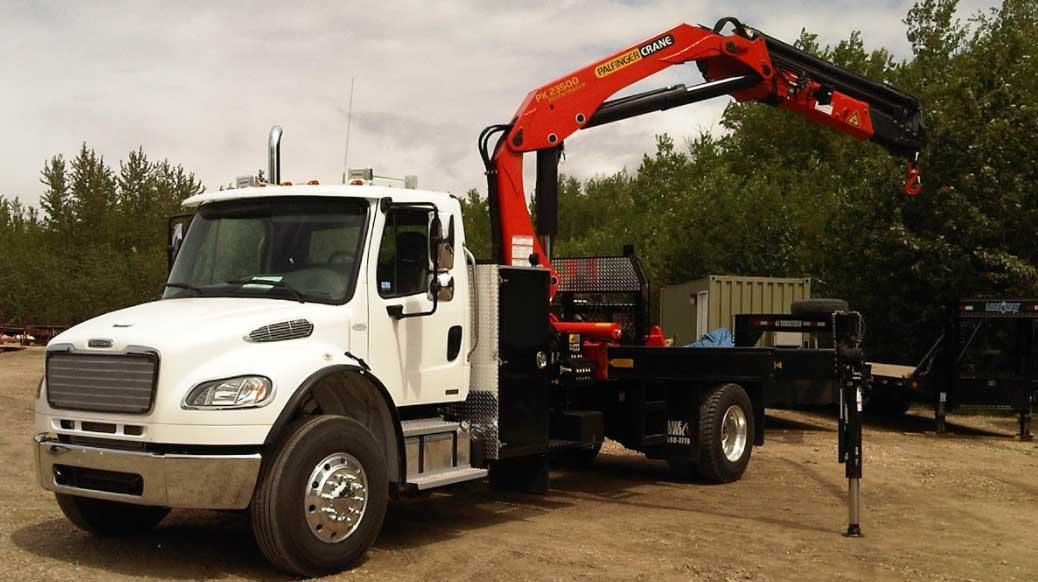
I will admit, I am a big Palfinger fan, if you look at quarterly reporting it will vary who is #1 in the world either Palfinger or Hiab.  Either way, both are the top 2 cranes in the world when it comes to sales. The technology on knuckle boom cranes has far outpaced that of the stiff boom industry, with AOS (active oscillation control), ISC (internal stability control) and many more features that are now almost commonplace in the knuckle boom world, this is why I love this industry, operators run THE safest cranes in the world, they just need a little help with how to use them from www.KnuckleBoomTraining.ca More recently, Palfinger launched another large crane into the marketplace:

Does Your Company Need Crane Training?

I get asked this question many times over and the answer hasn’t changed.  There are (at the time of this update), no Provincial requirements that mandate your company to take the awareness program we provide. All knuckle boom instruction is voluntary only.  If you are told by anyone who sells cranes that you are required to have training of any sort (particularity in Saskatchewan), I would ask them to provide you with Provincially mandated proof! I get someone wants to sell you a training program, we will never “Lie” to you or mis-lead you in any way.  You either want the program as part of your pro-active COR or safety recognition program, or you don’t. Suffice it to say, good

Edmonton Knuckleboom Crane Operator Program

We’ve done tremendous amounts of training “on-site” and that’s not about to change.  In fact, we are one of the very few companies that come directly to your location, train on your cranes and save you significant revenue and eliminate downtime by coming to you. So far in 2013, we have saved 9-companies the need to shut down for a full day, send their crew to the Cedar Park Inn and all the added costs, make it a better choice to simply come to you and do all that is required to safety train. We also travel to the following areas: Grande Prairie Fox Creek Ft. St John Fort McMurray Lloydminster and many more Call us at (844) 334-8847 or

Crane Weight Scales – Do You Really Need Them?

When we teach knuckle boom crane safety training programs around Western Canada, there is a very common theme among all of the business owners and operators.  Over 90% of the owners tell us that they are “guessing” at the weights that they are picking up.  Meaning, ALL of the operators know that the Hiab or Palfinger or what-ever model they are operating, that as the crane reaches out, once it is over-loaded, it will simply stop.  I’m not sure about you, but do you think that is the best method to determine how heavy a load really is?  We can agree it’s not, so with that, we decided to bring in a cost-effective, portable crane weight scale or indicator that

SATCC – Saskatchewan Picker Truck Information

I’ve been hearing about a company that provides knuckle boom training in SK, is advising companies that OH&S in SK is saying it is mandatory to have knuckle boom training in that province and that once you are trained in their program, you can then operate any knuckle boom crane.  This is simply NOT TRUE! Click HERE to review the information directly from OH&S Sask and read the NOTICE 1/8 down the page, “They do NOT certify, endorse or recommend any one company”. We will never advise you of anything other than, our training is the best there is. The conversation I just had with SATCC (Saskatchewan Apprenticeship and Trade Certification Commission) has indicated the following: “SATCC doesn’t have any requirements

Hy-Rail Railway Crane Training Program

In spite of the ability to ride the rails, these knuckle boom cranes can actually be more dangerous. The ONE most critical issue with cranes that we promote – STABILITY– and once you have this ingrained into the operator, the rest comes easier. HOWEVER…what we find is that with Hy-Rail Crane Trucks primarily, that while sitting on the tracks, the issue is the ground around the rail lines slopes downward at an angle, making it very difficult to use the outriggers properly and get a good, stable working platform.  Many companies are “used to” this and simply use short reach cranes (less than 25′ – see photo below) to offset the reduced stability, good practice but makes it very challenging