The Hidden Liability in Bulk Propane Tank Setting (Alberta and Saskatchewan)
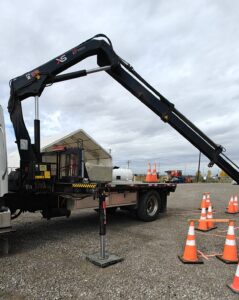
Bulk propane companies across Alberta and Saskatchewan move thousands of tanks every year.
420 lb pig tanks.
1,000 gallon bullets.
Skid-mounted units.
Farm tanks in muddy spring yards.
Commercial rooftop sets.
And almost every one of those lifts involves a light duty crane.
Here’s the uncomfortable truth:
Most propane companies believe they’re compliant.
Many aren’t.
Contact us to book an on-site picker safety program
Propane Is Not Just Another Lift
Setting a propane tank is not the same as lifting a bundle of lumber or a pallet of shingles.
You are lifting:
• Pressurized vessels
• Flammable product
• Often in residential yards
• Often near ignition sources
• Often on uneven ground
• Often in winter conditions
When a crane failure happens in this environment, the consequences multiply fast.
It’s not just a dropped load.
It’s:
-
Property damage
-
Environmental release
-
Fire risk
-
Worker injury
-
Public exposure
-
Regulatory investigation
What Alberta and Saskatchewan Actually Require
Many companies assume that because propane tank setting is “routine,” it doesn’t require formal crane certification.
That assumption is dangerous.
Alberta
Under Alberta OHS Code – Part 6 (Cranes, Hoists and Lifting Devices):
Operators must be:
-
Competent
-
Trained
-
Assessed
-
Able to demonstrate knowledge of load charts and safe operation
If you are using:
-
Knuckle boom pickers
-
Service body cranes
-
Folding boom cranes
You fall under Part 6 requirements.
“On-the-job training” is not a legal defense if something goes wrong.
Call / Text us (587) 209~2589 for more information
Send us an EMAIL to find out more
Saskatchewan
Saskatchewan’s Occupational Health and Safety Regulations require:
-
Adequate training
-
Documented competency
-
Safe operating procedures
-
Lift planning when conditions warrant
Saskatchewan is particularly aggressive in enforcement when incidents involve:
-
Public exposure
-
Hazardous materials
-
Transport-related lifting
Propane qualifies.
The Most Common Risk I See in Propane Operations
-
Short-jacking stabilizers because “it’s a quick set”
-
Ignoring reduced capacity when ground is soft
-
Not calculating dynamic load when tank still has product
-
No formal lift plan for tight residential installs
-
No documented operator evaluation in years
None of this shows up… until it does.
The Insurance Problem Nobody Talks About
Here’s where it gets serious.
If there’s an incident and the investigation shows:
-
No formal crane training
-
No competency verification
-
No documented lift procedure
-
No refresher evaluation
Insurance adjusters don’t just write cheques.
They start asking questions.
And propane companies are high-profile targets.
Why Propane Companies Are More Exposed Than Most Industries
Roofers drop shingles — bad day.
Propane companies drop tanks — potentially catastrophic day.
You operate in:
-
Rural farms
-
Acreages
-
Urban residential zones
-
Commercial sites
-
Industrial yards
Your risk footprint is wide.
That makes documentation and competency critical.
The Business Case for Proper Light Duty Crane Training
This is not about tickets on a wall.
It’s about:
-
Load chart literacy
-
Stabilizer deployment discipline
-
Ground condition assessment
-
Lift planning awareness
-
Understanding dynamic load vs static
-
Recognizing when a lift becomes “critical”
When operators understand WHY — not just HOW — incident rates drop.
And so do:
-
Maintenance costs
-
Outrigger stress failures
-
Boom wear
-
Insurance headaches
Spring Surge = Risk Surge
Every year:
-
Spring thaw
-
Farm tank swaps
-
Seasonal installs
-
Staffing changes
New operators. Temporary hires. Increased lift frequency.
This is when incidents spike.
And this is when training gaps show up.
If You Run a Bulk Propane Operation in AB or SK
Ask yourself:
-
When was your last formal crane evaluation?
-
Do operators truly understand load charts?
-
Do you have lift plan criteria?
-
Can you defend your training in front of OHS?
If the answer is “we think so” — that’s not a plan.
Final Thought
Bulk propane is a disciplined industry.
Your lifting operations should be too.
The goal isn’t more paperwork.
The goal is:
-
Protecting your operators
-
Protecting your company
-
Protecting the public
-
Protecting your margins
Because one preventable crane incident in propane doesn’t just cost money.
It changes everything.
If you’re operating in Alberta or Saskatchewan and want a practical review of your light duty crane procedures — reach out.
No fluff. Just real-world application for propane operations.